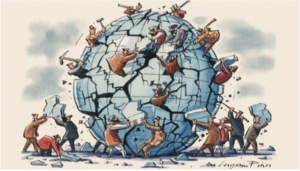
Conflict in a Fragmenting World Order
Amsterdam, 12-15 October 2025
Hosted by the Netherlands Defence Academy for the
International Society of Military Sciences
Program
Link to a PDF of the current program. Final program to be provided at the conference.
Accepted Abstracts
All abstracts accepted by the conference committee are included at this link. Abstracts by authors not registering or attending the conference were not included in the program and will not be published in the book of abstracts. Link to accepted abstracts. Scroll down for the program with linked abstracts (in progress).
Baltic Military History Conference 30-31 October 2025
Historical Perspectives on the Laws of War and the Implementation of Military Justice
The upcoming Baltic Military History Conference will examine laws of war and military justice practices through a historical lens, exploring their profound effects on societies, people, and state institutions with a focus on the Baltic Sea region. It will be both in person and online - link to register.
Publication Announcements
Modern War and Grey Zones: Design for Small States, edited by Marzena Żakowska and David Last, was published by Routledge in 2025, and is available for purchase.
Scaling Up, Learning Lessons, Ensuring Quality, ISMS Annual Conference 2024 Book of Abstracts, edited by ISMS Annual Conference 2024 Book of Abstracts, edited by Kjell Engelbrekt, Marika Metsola Renström, Victoria Zhang, David Last
Two books from previsous conferences are now in the final stages of external review and will be published online soon as free e-books by NATO DEEP e-Academy Press. At the links below you will find previews and tables of contents for the texts anticipated.
Policing the Grey Zone, edited by Marina Caparini and David Last (link to sample)
Building Defence Capabilities for Future Uncertainty, edited by Laurenz Fürst, Ugurhan Berkok, Odin Bartsch and David Last (link to sample)
The University of Namibia School of Military Science is publishing with Stellenbosch University Press SUN Media:
Security, Resource Control, and Democracy. School of Military Science Conference Proceedings, edited by Mumba Thaddeus Mahela, Davis Mumbengegwi, and David Last. (link to sample)
Publication Projects for 2025-2026
These projects are in progress and open to interested participants. Each will be advanced by a working roundtable discussion during the conference.
Journal on Baltic Security - Call for Papers.. Integration of Artificial Intelligence in Professional Military Education, for a special issue in Fall 2025. Deadline extended.
Developing Science for Command Senior Enlisted Leaders. Led by Eric Bégin of the NCM Leadership College, Canada , led by Eric Bégin of the NCM Leadership College, Canada. Working Group 4 Leadership, Command Control and Basic Competencies.
Chaplains, Ethics, and Society.. Led by Stefan Gugerel of the Austrian Defence Forces. Working Group 4, Leadership, and Working Group 5, Military Law and Ethics.
Critical Thinking and the Humanities. Led by Anne Marie Hagen, Norwegian Defence University College, Working Group 9 Military Education.
Strategy and Modern Wars in the Grey Zone. Led by Jānis Běrziņš, Lukas Milevsky, and Marzena Żakowska. What small countries need to understand about the new wars, and how they will affect evolving strategy. This is the hinge between WG1’s completed book, Modern War and Grey Zones: Design for Small States, and the new book project being planned for WG10 on Strategy for Small States.
Program Overview
Sunday 12th of October
16.00 – 18.00 Joint meeting Working Group Chairs + Council at pension Homeland (Building 006)
18.00 – 20.00 Meet and Greet at the Billiard Room of Pension Homeland (Building 006)
Monday 13th of October
8.30 – 9.00 Registration opens, coffee and pastries
9.00 – 10.15 Welcome by Prof dr. ir. Bas Rietjens & Gen bd, dr Allard Wagemaker
10.15 – 10.30 Coffee break
10.30 – 12.00 Breakout session 1
12.00 – 13.00 Lunch
13.00 – 14.30 Breakout session 2
14.30 – 14.45 Coffee break
14.45 – 16.15 Breakout session 3
16.15 – 18.30 Boat tour through Amsterdam
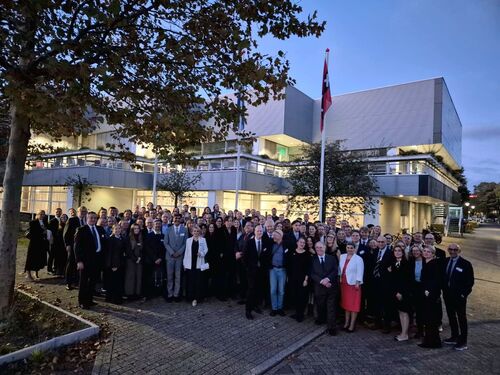
There will be time to change for dinner after the boat tour. The conference photograph will be taken before the dinner.
19.00 – 21.00 Typical Marine Dinner
The boat tour and conference dinner are included in the conference registration fee. They are part of a tradition that began with the first meeting of ISMS hosted at the same location in 2008. Please join us! Dress warmly for the boat.
Tuesday 14th of October
8.30 – 9.00 Doors open, Coffee
9.00 – 10.15 Roundtable discussions
10.15 – 10.30 Coffee
10.30 – 12.00 Breakout session 4
12.00 – 13.00 Lunch
13.00 – 14.30 Breakout session 5
14.30 – 15.00 Coffee
15.00 – 16.00 Plenary session by ISMS President Dr. Rene Moelker and
Dr. Tiia-Triin Truusa
16.00 – 17.00 Network session
Wednesday 15th of October
9.00 – 11.30 Council Meeting for ISMS 2026 business meetings with librarians, research directors, and editors (hybrid)
11.30 – 13.00 Planning and publications meetings (hybrid)
Program with Abstracts
The order of presentations in each session is at the discretion of the session chair, and may be adjusted as required. Work is in progress - abstracts will be linked before the conference begins. Some abstracts may not be available for various reasons. Presenters or Working Group Chairs may provide papers, presentations, or additional materials to be linked to the site. If you have any additions, including missing abstracts, please email them to last-d@rmc.ca.
Breakout session 1 Monday 13th from 10.30 – 12.00
WG 1: War Studies
Room Amstel 2
Session Chair: Marzena Żakowska
Guntis Skunstins and Leva Bērziņa, Phd Student, University of Latvia. Technological maturity for Jeune École: The case of Ukraine’s naval strategy..
Agniete Zotkeviciute Baneviciene, State building terrorists’ groups: Case study of Taliban, General Jonas Žemaitis Military Academy of Lithuania.
Jānis Bērziņš, Doctrinal Evolution and Operational Integration of UAVs in the Russian Armed Forces, National Defence Academy of Latvia.
Gabriela Rocha Bernardes, The possibilities and paths of Military Sciences in Brazil as an interdisciplinary scientific area, Brazilian Army Command and Staff College.
WG 2: Military History
Room Amstel 3
Session Chair: Art Johanson
Roland Popp, A Hind in the Sand: Operation MOUNT HOPE and the Extraction of Captured Soviet Equipment from Chad After the Toyota War, Military Academy (MILAC) at ETH Zurich.
Adrian Wettstein, “Completely unknown tank ahead”: German Intelligence Gathering from Captured Soviet Equipment during Operation “Barbarossa”, Military Academy (MILAC) at ETH Zurich.
Michał Krzysztof Mydłowski, Lessons (un)learned – US Army tactics and weapons from Winfield Scott to Emory Upton.
Ethan Sepp Rafuse, “Perhaps … Distorted by the Atmosphere’: Clausewitz, the Centurions, Captivity, and the Civil-Military Dynamic in Changing World Orders.
Jesper Sahl Nielsen, Fighting tomorrow's war with yesterday's tools: Danish Intelligence in Helmand (2007-12)
WG 4: Leadership, Command and Basic Competences
Room Schelde
Session Chair: Peter Olsthoorn
Lobna Cherif, Royal Military College of Canada, Character-based emotional intelligence: a conceptual mapping for military leadership.
Peter Papler/NATO Mountain Warfare Center of Excellency. Bad Leadership: Slobodan Milošević vs Donald Trump.
Anne Elise Reiffenstein, Royal Roads University. Command Rewired: AI, Distributed Cognition, and the Reconfiguration of Military Leadership.
WG 6: Security and Defence Policy Strategy
Room Theems
Session Chair: Laurenz Furst
Tudor Andreea Loredana, Institute for Political Studies of Defence and Military History / and Dunarea de Jos Univeristy, Security Hedging in a Fragmented Order: How small Democracies navigate between Alliances, Coalitions, and Informal Security Regimes.
Kjell Erik Engelbrekt, Swedish Defence University. A nuclear deterrence plan B for Europe?
Vidmantė Giedraitytė, General Jonas Žemaitis Military Academy of Lithuania. Promoting Civil Participation in National Security: Lessons from Lithuania.
Katerina Veljanovska Blazhevska, MIT University Skopje, Faculty of Security Sciences. Futures-Oriented Governance for Outer Space: A Strategic Imperative for Security and Defence Policy.
WG 7: Armed Forces and Society
Room Elbe
Session Chair: Kristin Ljungkvist
Annelies van Vark and Jörg Noll, Leiden University / Ministry of Defence, the Netherlands. Total defense as answer to hybrid threats? Opportunities and caveats.
Olga Nozdryn-Płotnicka, War Studies University, European Battle Groups a future of Europe's Defense.
Vida Česnuitytė, Svajūnė Ungurytė-Ragauskienė, General Jonas Žemaitis Military Academy of Lithuania, Factors and its Dynamics of Retention of Military Personnel in the Lithuanian Armed Forces.
Svajūnė Ungurytė-Ragauskienė, Vida Česnuityė,General Jonas Žemaitis Military Academy of Lithuania, Recruitment to Professional Military Service in Lithuania: Motivating and Limiting Factors.
Dr Teija Sederholm, National Defence University, Finland, Maro Ketola, Silvia Sommarberg, Voluntary National Defence as a Strategic Resource in Finland’s Total Defence.
WG 9: Military Education
Room Liffey
Session Chair: Ørjan Rogne Rise
Dr Deborah Mayersen, Australian Defence Force Academy, The Case for Incorporating Atrocity Prevention Education into Military Education: In Australia and Internationally
Robert Lummack, Collège militaire royal de Saint-Jean, Learning for Turbulence
Anne Marie Hagen, Kjetil Enstad, Norwegian Defence University College, Navigating complexity: Developing critical thinking skills through humanities electives in PME.
David Francis Manning, National Defense University, International Military Education & Training in a Volatile, Multipolar World.
Breakout session 2 Monday 13th from 13.00 – 14.30
WG 10: Strategy
Room Amstel 2
Session Chair: Jānis Bērziņš, and Lukas Milevski
Sandro Teixeira Moita, Brazilian Army Command and General Staff College, Inescapable and inevitable: Strategy in the Age of AI.
Samuel Zilincik, James Horncastle, Royal Danish Defence College. Revisiting Multi-Domain Operations: A Historical Reflection on the Respective Roles of Combination and Prioritization in the Conduct of War.
WG 3: Military Technology
Room Amstel 3
Session Chair: Christopher Renahan
Martin Lundmark and Roland Hellberg, Swedish Defence University, Demonstrator and prototype activities for boosting defence innovation.
Svajonė Bekešienė, General Jonas Zemaitis Military Academy of Lithuania. Enhancing Small Arms Effectiveness through NATO Battlefield Lessons and Soldier-Focused Design Principles.
Charlotte Duval, Bibora Imre; Alexander Salt; Alexander Rudolph. Triple Helix Integrating the F-35 in a Personnel Challenged RCAF.
WG 5: Just War, Ethics, and Lawfare
Room Schelde
Session Chair: Olavi Jänes
Florian Demont-Biaggi, MILAC at ETH Zurich, Deep Morality, LOAC, and the Relevance of Military Practices for War Ethics.
Gita Leitlande, National Defence Academy of Latvia. The Applicability of Walzer’s Supreme Emergency Concept in a War against Russia
Šakočius Alvydas, The General Jonas Žemaitis, Military Academy of Lithuania. Jurisdictional resilience of the Baltic States and management of the risks of lawfare.
Mihaly Boda Ludovika University of Public Service, What is the relationship between justice and war?
WG 7: Armed Forces and Society
Room Theems
Session Chair: Kristin Ljungkvist
Dorota Domalewska, War Studies University, Russian disinformation as a tool of geopolitical polarisation and fragmentation of the global order.
Tiia-Triin Truusa and Kairi Kasearu (University of Tartu); Liina-Mai Tooding (University of Tartu) Baltic Defense College, Hybrid Threats and Comprehensive, Defense in Small Diverse Societies. The Case of Estonia.
Stefano Alfredo De Rosa, Military Academy (MILAC) at ETH Zurich, International Cooperation Among the Armed Forces – Changes and Stability in Swiss Public Opinion over the Past 30 Years.
WG 9: Military Education
Room Liffey
Session Chair: Jill Scott
Khalid Mahmood Shafi, ISSRA, NDU Pakistan, Embedding Climate Literacy in Professional Military Education: Strengthening Strategic Leadership for Environmental Security.
Rasa Smaliukiene, General Jonas Žemaitis Military Academy of Lithuania, Crisis Response and Disaster Management Curriculum in Military Education.
Danic Parenteau, Collège militaire royal de Saint-Jean, Towards the development of a unified university curriculum for officer education?
Breakout session 3 - Monday 13th from 14.45 – 16.15
WG 1: War Studies
Room Amstel 2
Session Chair: Marzena Żakowska
Tine Molendijk, Peter Pijpers, Elisabeth Dick, Ilse Wijnen, Netherlands Defence Academy, Navigating the Cognitive Battlefield.
Peter Bovet Emanuel, Swedish Defence University, Augmenting Operational Planning through AI: Exploring Decision Advantages in the Comprehensive Shield 2025 Experiment.
Andre Luiz Viana Cruz de Carvalho, Brazilian Army Command and General Staff College, What Are Land Forces For? Rethinking Roles, Design, and Strategic Purpose in a Fragmented World.
WG 2: Military History
Room Amstel 3
Session Chair: Art Johanson
Vlad-Cristian Gheorghita, Institute for Political Studies of Defence and Military History, Ministry of National Defence. International Disorder and Conflict: The Romanian-Hungarian War of 1919.
Karlis Dambitis, Preparations of the Latvian army for the upcoming military conflict in spring 1940. National Defence Academy of Latvia.
Sean Nicholas Kalic and Ethan Rafuse, Defence Alliances and Partnerships in American Ways of War since 1945.
Valdis Kuzmins, National Defence Academy of Latvia, ”Disposable Infantry" tactics: Red Army's "Active Bayonets" (1944 1945) and Russian Army's "Kashniks", "Storm Z", "Storm V" (2022 2025).
WG 4: Leadership, Command and Basic Competence
Room Schelde
Session Chair: Peter Olsthoorn
Andre Korsmo Berntsen, The Military Academy at ETH Zurich, Cognitive Congruence, Friction, and Team Performance under Tactical Stress.
Hans Christian Breede, Canadian Defence Academy, Embracing the Paradox: Military Doctrine through VUCA.
Sanna Roxanne Hirvonen, Swedish Defence University & University of Gothenburg. New Recruits, New Realities: Understanding Young Conscripts’ journeys through Military Training.
William Combes, Baltic Defence College, Navigating Complexity through Human-AI Collaboration: Lessons from PME Workshop Design for Command and Control in an Era of Accelerating Change.
WG 6: Security and Defence Policy Strategy
Room Theems
Session Chair: Laurenz Furst
Julia Gabriela Czajka, War Studies University, Defence diplomacy as a tool of shaping international security.
Thiago Bentes de Mello, ECEME (Brazilian Army) COP30 in Brazil and Defense Studies: a proposed contribution to the debates.
Jaroslaw Gryz, War Studies University, Russia’s war with Ukraine and its consequences for NATO.
Natosvajonė Bekešienė, General Jonas Zemaitis Military Academy of Lithuania, Building cognitive Defence Mechanisms against Adversarial Cyber and Information Warfare
WG 7: Armed Forces and Society; Crisis and the Will to Fight
Room Elbe
Session Chair: René Moelker
Miha Šlebir and Janja Vuga Beršnak, Faculty of Social Sciences, University of Ljubljana. Resilience of first responders: Individual perceptions of crises and crisis response among police, military and health first responders in Slovenia.
Rasa Smaliukiene and Vidmante Giedraityte, General Jonas Žemaitis Military Academy of Lithuania, Value proposition for joining the military in a descending world order: the case of the Lithuanian armed forces.
Ieva Bērziņa, National Defence Academy of Latvia, Russo-Ukrainian war and willingness to defend a country among Latvian youth.
Markéta Odlová and Margit Bussman, Andris Banka, University of Greifswald. Reinforcements Arrival Time and Willingness to Fight: a Survey Experiment in Lithuania.
WG 7: Armed Forces and Society
Room Elbe
Session Chair: Kristin Ljungkvist
Dorota Domalewska, War Studies University, Russian disinformation as a tool of geopolitical polarisation and fragmentation of the global order.
Tiia-Triin Truusa and Kairi Kasearu (University of Tartu); Liina-Mai Tooding (University of Tartu) Baltic Defence College, Hybrid Threats and Comprehensive Defence in Small Diverse Societies. The Case of Estonia.
Stefano Alfredo De Rosa, Military Academy (MILAC) at ETH Zurich, International Cooperation Among the Armed Forces – Changes and Stability in Swiss Public Opinion over the Past 30 Years.
WG 9: Military Education
Room Liffey
Session Chair: Hanna Forsberg
Heather Jill Scott, and Cecile Malardier-Jugroot, Royal Military College of Canada, The Role of Research in Military Academies in a Fragmenting World Order: How research contributes to a Sovereign Defense and Security Innovation Strategy.
Andreas Rüdisüli, Swiss Military Academy at ETH Zurich Military. Commander and/or Manager of the Military? Embedding the double nature of the Swiss Professional Officer into Professional Military Education.
Dr Deborah Mayersen, Australian Defence Force Academy, The Case for Incorporating Atrocity Prevention Education into Military Education: In Australia and Internationally
Roundtables - Tuesday 14th from 09.00 – 10.10
Roundtable sessions are intended to generate discussion across working groups, fostering new research and publications. Please consider attending a session that fits your research and publication interests - everyone is welcome. Resulting plans for books or special issues to meet emerging professional needs will be discussed in the publications and planning sessions scheduled for Wednesday.
WG 1 & WG 10
Room Amstel 2
Strategy and Modern Wars in the Grey Zone:
Books and New Research
Co-Chairs: Marzena Żakowska, Jānis Bērziņš, and Lukas Milevski.
What do small countries need to understand about the new wars, and how will they affect evolving strategy? This is the hinge between WG1’s completed book, Modern War and Grey Zones: Design for Small States, and the new book project being planned for WG10 on Strategy for Small States.
Rapporteurs: Margareta Avunala Hoek and Maud Naomi Hutten, Groningen University
WG 4:
Room Amstel 3

Developing Science for Command Senior Enlisted Leaders:
Research and Book Project
Chair: Eric Begin
The panel asks: What do Command Senior Enlisted Leaders (CSELs) do, and how do they prepare? What should they learn early—how early, and where? What are the implications of the inverted career (moving from specialty to generalization) ? How do NCOs differ from officers, and how do they leverage their position as senior enlisted leaders? Abstract.
Eric Begin, Canadian Noncommissioned Member Leadership College, Critical Senior Enlisted Leaders Project
Eric Begin, Presentation on CCEL
Rapporteurs: Lars Terpstra, Roos Ruedisueli, and Jan Van Soest, Groningen University
WG 4 & WG 5:
Room Schelde

Chaplaincy, Ethics, and Society
Chair: Stefan Gugerel
Next steps, research, and publications to support the military and social roles of military chaplaincies in democratic countries with diverse populations and collective ethical challenges. The central challenge is not individual conscience, but the collective mobilisation of faith and identity amidst diversity in liberal democracies. Abstract.
Rapporteurs: Arianne Zwart and Ireen van Drunen, Groningen University
WG 9: Military Education
Room Theems

Critical Thinking and the Humanities in
Professional Military Education
Chair: Anne Marie Hagen
Discussion of a peer-reviewed special issue/edited collection on the topic of critical thinking in professional military education (PME), with a particular emphasis on the role of the humanities in developing this important skill. Planned publication is in 2027. The roundtable will introduce the concept for the planned publication and open a discussion on the topic. A call for papers will be published after the conference. Those interested in contributing to the publication are warmly invited to attend this roundtable.
Rapporteurs: Sybren Van Vierzen and Niek Esser, Groningen University
Breakout session 4 - Tuesday 14th from 10.30 – 12.00
WG 1: War Studies
Room Amstel 2
Session Chair: Marzena Żakowska
Niklas Nilsson, Swedish Defence University. Intelligence and Strategic Communication.
Marzena Żakowska, War Studies University. Modern War and Grey Zones – what should small states be aware of?
Thomas Slensvik, Anders Sookermany, Norwegian Defence University College. Reimagining Joint Operational Planning: Systems Oriented Design and AI as Tools for Navigating Military Complexity.
Guilherme Moreira Dias, Nicole Ribeiro Neves, Brazilian Army Command and General Staff College, Strategic Command without Troops: Brazilian Military Leadership in MONUSCO and the Dynamics of South–South Security Cooperation.
WG 3: Military Technology: Military Culture and Emerging Technology in Canada
Room Amstel 3
Session Chair: Christopher Renahan
Bibora Imre, Charlotte Duval-Lantoine, Alexander Salt, Alexander Rudolf, Lund University, Sweden, Physicality and Elitism in Canadian Drone Operator Identity' on the panel 'Military Culture and Emerging Technology in Canada’.
Alexander Rudolph, Bibora Imre; Charlotte Duval; Alexander Salt, Carleton University, Following the Digital Snail’s Trail: The Short History of CAF Cyber Operations.
Alexander Gordon Fordyce Salt, Charlotte Duval-Lantoine, Bibora Imre, Alex Rudolph, Canadian Global Affairs Institute. Cautious by Design: Strategic Culture and Canada’s Military Modernization on the panel 'Military Culture and Emerging Technology in Canada’.
Suzana Lampreia, Teresa Morgado, Valter Vairinhos, Victor Lobo, Portuguese Naval Academy, Dynamic Maintenance Integrating Various Methods.
WG 5: Hybrid Threats and the Application of Law
Room Schelde
Session Chair: Olavi Jänes
Isaac Nitschke. Royal Canadian Navy, Seas’ing the Initiative: Exploiting the Governance Gaps of the Maritime Domain in Pursuit of Revisionist Agendas.
Joris van Wijk, Welmoet Wels, Royal Netherlands Marechaussee, Vrije Universiteit Amsterdam. The Military and Battlefield Evidence: an (un)easy combination?
Ian Douglas Ferrier, Lancaster University. The Folly of Falsehood: Information Disorder as a Path to Strategic Ruin.
WG 6: Security and Defence Policy
Room Theems
Session Chair: Laurenz Furst
Marta Gebska, War Studies University. Security, Geo-economics and Geopolitics Challenges of Three Seas Initiative after the 10th Summit in Warsaw.
Débora Bedim Loures, Brazilian Army Army Command and General Staff College, From Haiti to the Congo: The Evolution of Brazil’s Role in Peacekeeping Operations and Its Place in National Defense Policy.
Ringailė Kuokštytė, General Jonas Žemaitis Military Academy of Lithuania, Defence Under Pressure: Balancing Strategic Support for Ukraine with National Resilience in the Baltic.
Jahangir Arasli, Institute for Development and Diplomacy at the ADA University Russia's Quadriga of War: Patterns of Strategic Interaction of the Anti-Westen Alliance [unable to attend]
WG 8: Defence Management and Economics
Room Elbe
Session Chair: Mohamed Naceur Essaddam
Mohamed Naceur Essaddam, Royal Military College of Canada. Optimizing Defense Resources: The Importance of Currency Hedging and its Associated Challenges.
Hannamiina Tanninen, National Defence University. Modelling the robustness of the Finnish national preparedness supply chains in the state of emergency.
Pedro Manuel Geada Borda De Agua, Xavier Santos Lopes, CINAV, Portuguese Naval Academy, IUM. Negotiation as a key enabler in Multi-Domain Operations involving non-military entities. A Scenario-based approach.
Breakout session 5 - Tuesday 14th from 13.00 – 14.30
WG 10: Strategy
Room Amstel 2
Session Chair: Jānis Bērziņš, and Lukas Milevski
Samuel Zilincik and James Horncastle, Royal Danish Defence College, Revisiting Multi-Domain Operations: A Historical Reflection on the Respective Roles of Combination and Prioritization in the Conduct of War.
Toms Rostoks, National Defence Academy of Latvia, The quest to restore deterrence: evidence from the Russo-Ukrainian War.
WG 8: Defence Management and Economics
Room Amstel 3
Session Chair: Mohamed Naceur Essaddam
Çlirim Toci, Baltic Defence College, Tartu Estonia. Strategic Preparedness at the Baltic Defence College: Educating Future Military Leaders in Defence Management.
Ilze Vilka, Populist Encounters Research Group, Social Sciences Research Centre, Riga Stradins University, Populism, Economic Insecurity, and the Will to Resist: Strategic Fragility in the Baltic States.
Dumitrache Vlad Ionut, Maria Constantinescu, Brindusa Popa, Regional Department of Defense, Resources Management Studies, National Defense University Carol I, Romania. Rearm Europe and its opportunities for the Eastern European Defense Industry.
WG 6: Security and Defence Policy Strategy
Room Theems
Session Chair: Laurenz Furst
Brosh Menahem Teucher, USA, Democratic Predation: Resource Competition in a Fragmenting World Order.[unable to attend]
Agniete Zotkeviciute Baneviciene, General Jonas Žemaitis Military Academy of Lithuania, The Resilience of Baltic States to the Threats of the Political Security Sector.
Marlena Blicharz, War Studies University, Poland, Role of cultural diplomacy in security policy. Example of Republic of Korea.
Jānis Bērziņš, National Defence Academy of Latvia, Cognitive Warfare and Economic Neoliberalism: Democratic Resilience in Post-Crisis Europe.
WG 7: Armed Forces and Society
Room Elbe
Session Chair: Kristin Ljungkvist
Ausra Kaminskaite, General Jonas Zemaitis Military academy of Lithuania, The contribution of the National defense system to reinforcing a societal resilience to external threats
Jérôme Hubert and René Gapany, Military Academy (MILAC) at ETH Zurich, From "People’s War" to "Local Wars”: China’s Whole-of-Society Approach to Armed Forces Construction and National Defence under Xi Jinping.
René Moelker, Netherlands Defense Academy, Soccer is War! On the Globalization of War and the Blurring of Sports and War.
WG 9: Military Education
Room Liffey
Session Chair: Robert Lummack
Tali Neumann, Wikistrat, Developing Cognitive Agility: Preparing Officers for Uncertainty.
Anders McDonald Sookermany, Thomas Slensvik, Norwegian Defence University College, Designing for Complexity: Integrating Systems Oriented Design and AI in Professional Military Education.
Ørjan Rogne Rise, Hanna Forsberg (SDUC), Norwegian Defence University College, Evaluating AI as a Pedagogical Assistant in Military Staff Exercises: A Kirkpatrick-Based Approach to ICT Integration in PME
Direction for Emergencies
General. In case of locating a fire, being witness of or involved by a physical/mental accident or being involved by a bomb call report directly to the Naval Guard authority.
- In case of using the internal telephone dial 561000
- Using another phone dial 0889-561000
- If using a foreign phone dial +31 889 561000
Mental or physical accidents report
- Name victim
- Condition victim
- Location of accident
Fire call report
- Name
- Location of fire
- Kind and extent of the fire
- Are there victims (how many)
Bomb call
Report to the immediately surrounding ALARM, ALARM, ALARM
Report
- Name
- Location of suspicious object
- Describe the located object
Evacuate
In case of an evacuation leave the building using the shortest route and report at the rendezvous area. The shortest routes, the fire emergency exits and rendezvous areas can be found on the floor-plans located on the different walls in the building.
Fire-alarm system
Most of the buildings are equipped with an automatic fire-alarm system. If the system is activated, automatically after 3 minutes the evacuation signal will be activated. You have to leave the building at once using the shortest route and report at the rendezvous area.
Acknowledgements
This conference program was assembled with the invaluable assistance of Chantal Verweij of the Royal Netherlands Defence Academy, and Second Lieutenant Odin Bartsch, Canadian Armed Forces.